

Direct Answer: E-E-A-T Is the Trust Layer AI Search Systems Use to Decide What to Cite

E-E-A-T signals influence AI search visibility because AI answer systems, including Google AI Overviews, select and summarize content that shows demonstrable experience, expertise, authoritativeness, and trustworthiness. Strong E-E-A-T does not guarantee rankings or inclusion in AI Overviews, but weak or unclear E-E-A-T makes content easier to skip when an AI system chooses which sources to reference.
This guide explains what that means in practice, how to run an AEO audit and GEO audit against E-E-A-T signals, and where the limits of any AI visibility checker sit.
Key Takeaways
- AI search visibility depends on whether an AI system can extract a clear, verifiable answer from your content, not just whether a page ranks in classic search.
- E-E-A-T signals are evaluated at the page, author, and site level; AI systems benefit from consistent, machine-readable evidence across all three.
- An AEO audit focuses on answer structure and extractability; a GEO audit focuses on entity clarity, citation-worthiness, and generative summarization readiness.
- Google states there is no special optimization required for AI Overviews, and no markup guarantees inclusion. See Google’s AI features documentation.
- AI visibility scores are diagnostic indicators, not official Google ranking scores, and should be treated as directional signals.
What E-E-A-T Means for AI Search Visibility and Google AI Overviews

E-E-A-T is a quality framework, not a single ranking factor, and AI search systems use its underlying signals to judge whether a passage is safe to summarize and cite.
Google’s helpful content guidance describes people-first content as content created to help people, with clear sourcing, demonstrated expertise, and transparent authorship. AI answer systems inherit that expectation: they prefer passages that are specific, attributable, and internally consistent.
The four signals, translated for AI answer engines
- Experience: first-hand detail, process steps, observed outcomes, and practical constraints that generic summaries lack.
- Expertise: correct terminology, defined concepts, and accurate scope boundaries.
- Authoritativeness: consistent entity signals, credible references, and topical depth across related pages.
- Trustworthiness: accurate claims, visible author and update information, and no exaggerated promises.
For AI search visibility, the practical question is: can an AI system identify who is speaking, what they know, and why the claim is credible, without guessing?
AEO Audit vs GEO Audit: Two Lenses on the Same Content

An AEO audit improves answer extractability, while a GEO audit improves how confidently a generative engine can represent your brand and entities.
Answer Engine Optimization (AEO) concentrates on question-answer structure, concise definitions, and FAQ clarity. Generative Engine Optimization (GEO) concentrates on entity salience, topic confidence, citation patterns, and how well a passage survives summarization without distortion.
| Dimension | AEO audit focus | GEO audit focus |
|---|---|---|
| Primary goal | Make answers easy to extract | Make entities and claims easy to represent |
| Typical checks | Question-led headings, direct answers, FAQ blocks | Entity consistency, source clarity, topical depth |
| Common failure | Answer buried after long preamble | Ambiguous brand or author identity |
| Useful metric | Answer completeness per section | Topic confidence and entity salience |
Running both audits is more useful than running either alone, because a page can be extractable but not credible, or credible but hard to summarize.
How to Run an E-E-A-T Focused AI SEO Visibility Audit Step by Step
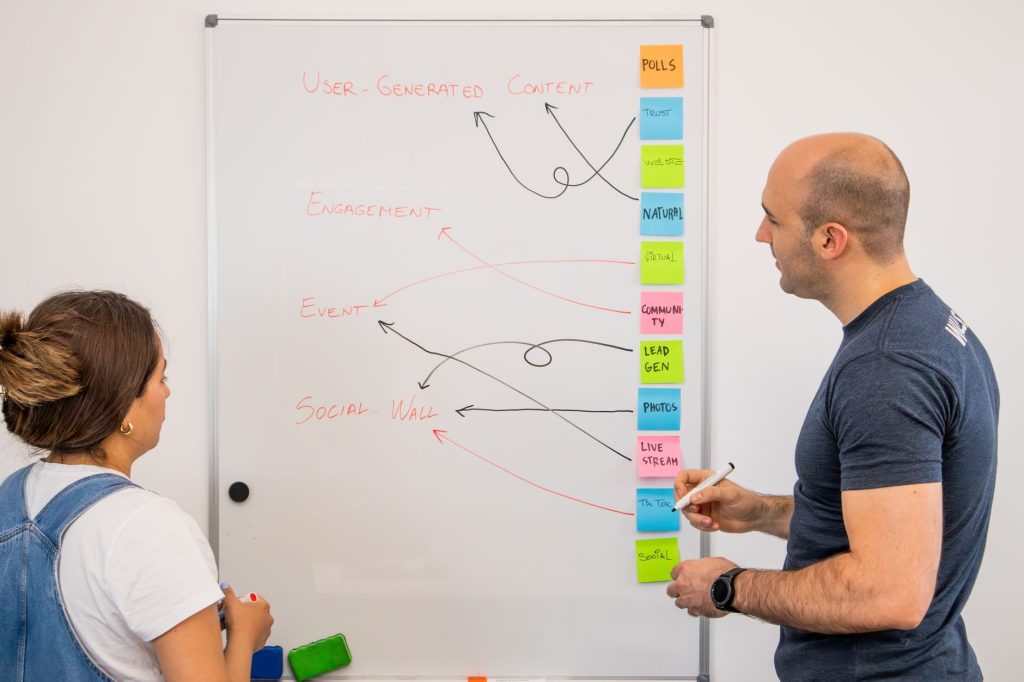
A repeatable audit workflow turns vague E-E-A-T advice into specific edits you can ship.
- Define the query set. List the questions your audience asks, including comparison and definition queries.
- Check answer extractability. Confirm each H2 opens with a one-sentence answer before explanation.
- Verify author and entity signals. Authors should have consistent names, roles, and credentials across the site.
- Assess source quality. Replace vague claims with citations to primary documentation where possible.
- Review structured data. Use structured data documentation to confirm markup matches visible content.
- Score passages, not just pages. AI systems often cite a passage; audit at the paragraph level.
- Log changes and re-test. Track edits against the same query set to see directional movement.
For teams that want a faster first pass, a web-based AEO/GEO AI content visibility auditor can evaluate pasted content for answer clarity and E-E-A-T signals before manual review.
Practical Use Case: Auditing a Service Page Before an AI Search Push
A realistic starting point is a single commercial page that answers buyer questions but buries the answers.
Consider a B2B services page with strong credentials but long introductory paragraphs. An E-E-A-T audit would flag that the author bio is missing, the definition of the service appears three screens down, and the FAQ repeats marketing language instead of answering questions.
After rewriting the H2s as questions, adding a one-sentence answer under each heading, and adding a visible author section, the page becomes easier for an AI system to summarize accurately. That does not guarantee inclusion in AI Overviews, but it removes avoidable ambiguity.
Teams comparing their own positioning against a competitor can use a Google AI Overviews mirror to preview how AI search may evaluate brand and entity signals. Simulated output is not a live Google result and should be read as a planning aid.
Where Traditional SEO Tools Stop and AI Visibility Audits Begin
Traditional SEO platforms and AI search visibility audits answer different questions, so they complement rather than replace each other.
Tools such as Semrush, Ahrefs, Surfer SEO, Clearscope, and MarketMuse are built around rankings, backlinks, keyword coverage, and content optimization scores. They remain useful for classic search performance.
An AEO or GEO audit asks whether a passage is understandable, trustworthy, entity-rich, and suitable for generative discovery. That is a different evaluation layer, and conflating the two leads to false confidence.
- Pros of AI visibility audits: passage-level feedback, entity and topic clarity checks, answer-structure guidance.
- Limits: scores are heuristic, not official Google metrics, and cannot predict AI Overviews inclusion.
AI Search Visibility Checklist: What to Verify Before Publishing
Use this checklist as a pre-publish gate for pages you want AI systems to understand and cite.
- Each H2 answers a real question and opens with a direct answer sentence.
- Author name, role, and relevant credentials are visible and consistent.
- Definitions appear before analysis, not after.
- Claims link to primary sources where available.
- FAQ answers are factual and non-promotional.
- Structured data matches visible content.
- No guarantees about rankings or AI Overviews inclusion are stated.
- Update dates and scope boundaries are clear.
Google’s guidance on AI-generated content and search reinforces that quality and helpfulness matter more than how content was produced.
Limitations: What an AI Visibility Score Cannot Guarantee
AI visibility signals are diagnostic, and no audit score can guarantee rankings or inclusion in Google AI Overviews.
Scores cannot confirm how a specific AI system will weigh trust signals on a given day, and they cannot predict competitor behavior or query volatility. They also cannot replace editorial judgment about accuracy.
Treat audit output as a structured prompt for improvement, not a certificate of performance.
FAQ
What is AI search visibility?
AI search visibility describes how clearly and credibly a brand, page, or passage can be understood, summarized, and cited by AI answer systems such as Google AI Overviews and AI chat search experiences.
Does E-E-A-T directly increase AI Overviews inclusion?
No. E-E-A-T signals support quality assessment, but Google states there is no special optimization or markup that guarantees inclusion in AI Overviews.
How is an AEO audit different from a GEO audit?
An AEO audit focuses on answer structure and extractability, while a GEO audit focuses on entity clarity, topic confidence, and how reliably a generative engine can represent your content.
Who should run an AI SEO visibility audit?
SEO professionals, content marketers, agencies, publishers, and SaaS teams that rely on informational or commercial content for discovery benefit most from a structured audit.
What is a common E-E-A-T mistake in AI-focused content?
A common mistake is adding trust language without evidence, such as claiming expertise while omitting author credentials, sources, or scope boundaries.
Can an AI visibility checker show real Google AI Overviews results?
No. Simulators and checkers provide directional or simulated output and should not be described as live Google results.
If you want a faster first pass, install the AI SEO Visibility Chrome Extension to audit selected text directly on a webpage.
Reviewed and published by EZ AGENCY AI Team. This article was drafted with AI assistance and edited for accuracy and clarity. Facts should be verified before relying on them for business decisions.
Last updated: November 6, 2026





