

AI search visibility can be measured accurately enough to guide decisions, but not with the precision of traditional rank tracking. Measurement relies on auditing content for answer clarity, entity salience, EEAT signals, and structural extractability, then comparing those signals against competitors in simulated AI search environments.
Key Takeaways

- AI search visibility is a set of measurable content signals, not a single official score from Google.
- An AEO audit evaluates how directly content answers questions; a GEO audit evaluates how well content supports generative citation.
- Entity salience and topic confidence help predict whether AI systems can identify and trust your brand.
- No tool can guarantee inclusion in Google AI Overviews or any AI search result.
- Simulated AI Overview outputs are diagnostic previews, not live Google results.
What Is AI Search Visibility and Why Does It Matter?
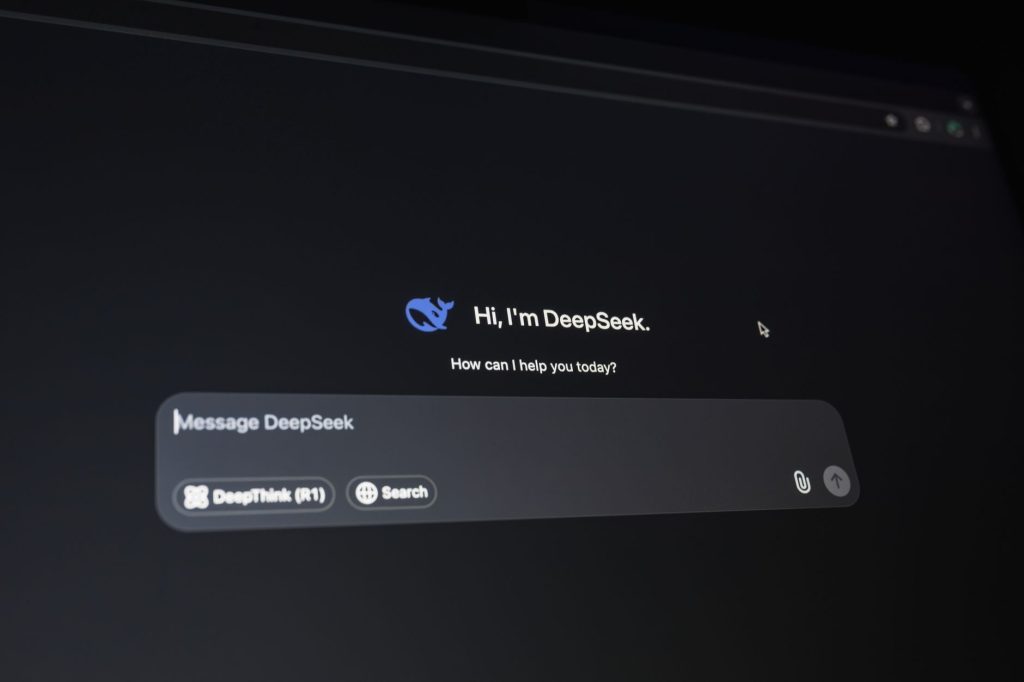
AI search visibility is the likelihood that your content is understood, selected, and cited by AI-powered search experiences such as Google AI Overviews, ChatGPT Search, and Perplexity. AI search visibility matters because answer engines summarise and attribute sources rather than simply listing links, so unclear or weakly evidenced content can be skipped entirely.
Traditional SEO visibility tracks rankings and impressions. AI search visibility tracks whether a passage is quotable, whether entities are unambiguous, and whether the page demonstrates experience, expertise, authoritativeness, and trustworthiness. Google’s guidance on AI features in Search confirms that no special markup is required, which means the quality of the visible text does most of the work.
The core problem being solved is uncertainty: marketers cannot see inside an AI model, but they can audit the inputs an AI system is likely to rely on.
How Can AI Search Visibility Be Measured Accurately?

AI search visibility is measured accurately by auditing content against observable criteria that correlate with citation and comprehension, then validating those findings with simulated AI Overview previews. Accuracy here means consistency and usefulness for decision-making, not an official Google metric.
An AEO audit (Answer Engine Optimization) checks whether each section opens with a direct answer, uses question-based headings, and provides concise definitions. A GEO audit (Generative Engine Optimization) checks whether claims are supported by evidence, entities are named consistently, and structured data reinforces meaning. Google’s documentation on structured data explains how markup helps search engines understand page entities, which supports GEO auditing.
An EEAT audit reviews author credentials, source citations, and transparency signals. Google’s helpful content guidance frames these as people-first quality signals rather than ranking formulas.
What Does a Practical AI Search Visibility Audit Look Like?

A practical AI search visibility audit follows a repeatable sequence that moves from content extraction to signal scoring to competitive comparison. The sequence below can be applied to a single page or a content cluster.
- Select a representative page or passage. Choose content that targets a question your audience actually asks, such as a definition, comparison, or how-to.
- Run an AEO clarity check. Confirm the first paragraph answers the heading in 40–80 words and that headings read as natural questions.
- Run a GEO evidence check. Verify that claims cite credible sources and that entity names, products, and locations are consistent throughout.
- Run an EEAT review. Check author information, publication dates, and whether the page discloses limitations or methodology.
- Compare against a competitor page. Use a simulated AI Overview preview to see how the same query might surface different sources and summaries.
- Log findings and prioritise fixes. Record which sections lack direct answers, which entities are ambiguous, and which claims need citations.
For teams that want to audit selected text directly on a live webpage, the AI SEO Visibility Chrome Extension supports in-page review. For a broader page-level assessment, the Web AEO/GEO Auditor evaluates pasted content for AI visibility and EEAT signals.
What Realistic Use Case Shows AI Search Visibility Measurement in Action?

A realistic use case is a B2B software team preparing a comparison page for a high-intent query. The team wants to know whether the page is likely to be quoted in an AI Overview or summarised by an answer engine.
The team pastes the draft into an AEO/GEO auditor and finds that the introduction uses vague marketing language instead of a direct definition. The GEO check flags that competitor names appear without context, and the EEAT review notes that no author or methodology is shown. After rewriting the opening as a 60-word definition, adding a comparison table, and citing two official documentation sources, the team re-runs the audit and sees improved clarity and entity consistency.
A simulated preview using Google AI Overviews Mirror helps the team compare how their brand and a competitor might be evaluated for the same query. The output is a diagnostic simulation, not a live Google result, so the team treats it as directional evidence.
What Are the Limitations of AI Search Visibility Scores?
AI search visibility scores cannot guarantee rankings or inclusion in Google AI Overviews, and they should never be described as official Google ranking scores. Scores reflect audited content signals under defined criteria, not the internal behaviour of any AI system.
Three limitations matter most. First, AI models change frequently, so a signal that helps today may be weighted differently later. Second, simulated AI Overview output is a preview built from available signals, not a live search result. Third, content quality signals interact with factors outside the page, including brand reputation and external citations, which an on-page audit cannot fully capture.
Google’s own guidance in Google Search and AI content emphasises rewarding original, helpful content regardless of how it is produced. Measurement should support that goal, not replace editorial judgement.
Who Should Use an AEO or GEO Audit Workflow?
An AEO or GEO audit workflow suits SEO professionals, content marketers, agencies, SaaS teams, publishers, and business owners who need evidence-based decisions about AI search readiness. The workflow is most valuable for teams producing explanatory, comparison, and how-to content that answer engines frequently summarise.
Traditional SEO platforms such as Semrush, Ahrefs, Surfer SEO, Clearscope, and MarketMuse focus on keyword coverage, rankings, and content optimisation for classic search results. AI search visibility auditing focuses on answer extractability, entity clarity, and citation readiness. The two approaches complement each other rather than replace one another.
What Should an AI Search Visibility Checklist Include?
A practical AI search visibility checklist should cover answer structure, entity consistency, evidence quality, and technical clarity. The checklist below can be applied before publishing or during a quarterly content review.
- Does the first paragraph answer the heading in under 80 words?
- Do H2 headings read as questions or clear topic labels?
- Are key entities named consistently and defined once?
- Are factual claims linked to credible external sources?
- Is author information and methodology visible?
- Does the page use structured data where appropriate?
- Has a competitor comparison been reviewed for the same query?
- Are limitations and uncertainty disclosed where relevant?
FAQ
Can AI search visibility be measured accurately?
AI search visibility can be measured accurately enough to guide content decisions by auditing answer clarity, entity salience, EEAT signals, and structural extractability. Accuracy means consistency across audits and usefulness for prioritising improvements, not an official metric from Google.
What is the difference between an AEO audit and a GEO audit?
An AEO audit focuses on whether content directly answers questions in an extractable format. A GEO audit focuses on whether content supports generative citation through evidence, entity clarity, and structural signals. Most teams benefit from running both together.
Do AI visibility scores affect Google rankings?
AI visibility scores are diagnostic tools and do not directly affect Google rankings. They help identify content improvements that may also support quality signals described in Google’s helpful content guidance.
Is simulated AI Overview output the same as a live Google result?
Simulated AI Overview output is a preview generated from audited signals and is not a live Google result. It should be used to compare how different content might be evaluated, not as evidence of actual inclusion.
Who should run an AI search visibility audit?
SEO professionals, content marketers, agencies, SaaS teams, publishers, and business owners can all benefit from an AI search visibility audit. Teams producing explanatory or comparison content often see the clearest value.
What are common mistakes in AI search visibility measurement?
Common mistakes include treating a visibility score as an official ranking metric, ignoring entity consistency, and relying on simulated output as proof of live inclusion. Another frequent error is auditing content without comparing it to a competitor page for the same query.
Start with a focused audit of one high-value page using the free Web AEO/GEO Auditor to see which AI visibility signals need attention. For teams that prefer in-page review, the Chrome extension offers a lightweight alternative.
Reviewed and published by EZ AGENCY AI Team. This article was drafted with AI assistance and edited for accuracy and clarity. Facts should be verified before relying on them for business decisions.
Last updated: November 11, 2026





