

AI search visibility is the degree to which your content can be found, understood, extracted, and cited by AI-powered search experiences such as Google AI Overviews, ChatGPT Search, Gemini, and Perplexity. The best AI search visibility tools help content marketers audit whether a page is clear, entity-rich, trustworthy, and structured well enough to be referenced in AI-generated answers — not just ranked in classic blue links.
Key Takeaways

- AI search visibility is not the same as traditional keyword ranking; it measures how easily AI systems can parse, trust, and quote your content.
- An AEO audit checks answer-readiness: direct answers, definitions, FAQs, and extractable short statements.
- A GEO audit checks generative-engine readiness: entity clarity, topical confidence, evidence, and EEAT signals.
- Google AI Overviews do not require special markup, but they do reward clear text answers and accurate metadata.
- AI visibility scores are diagnostic signals, not official Google ranking scores, and they do not guarantee inclusion in AI Overviews.
- Traditional SEO tools remain useful for rankings and backlinks, but they do not fully evaluate AEO or GEO readiness.
What AI search visibility means for content marketers
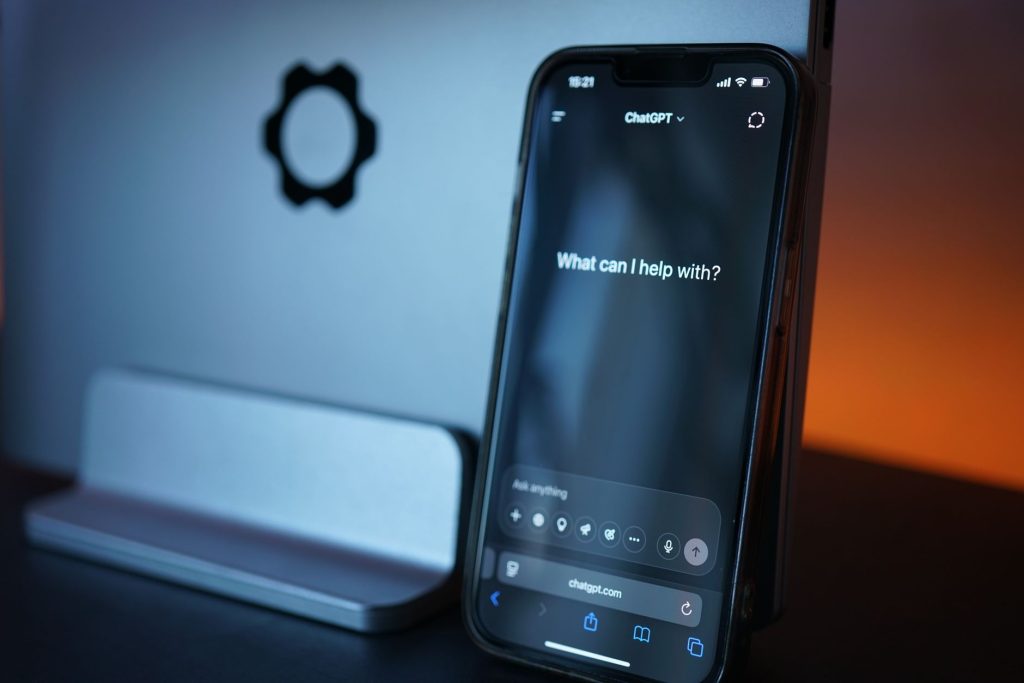
AI search visibility is the practical ability of your content to survive the shift from ranked links to generated answers. When a user asks a question in Google, ChatGPT, Gemini, or Perplexity, the system may summarise, extract, or cite sources instead of sending the user to a list of URLs. Content marketers therefore need to optimise for being understood and quoted, not only for being indexed.
This creates two related disciplines. Answer Engine Optimization (AEO) focuses on making content answer-shaped: clear definitions, direct responses, visible FAQs, and concise statements that an AI can lift without ambiguity. Generative Engine Optimization (GEO) focuses on making content trustworthy and entity-consistent: who wrote it, what organisation stands behind it, which entities it mentions, and whether the claims are supported by credible references.
Google’s own documentation on AI features in Google Search makes an important point: there is no special markup required to appear in AI Overviews or similar AI features. What matters is helpful, people-first content that can be understood and trusted. That is exactly where an AEO audit and a GEO audit become useful as diagnostic workflows.
AEO audit vs GEO audit vs traditional SEO tools

An AEO audit and a GEO audit answer different questions from a traditional SEO audit, and the best content workflow uses all three for different jobs. Traditional tools such as Semrush, Ahrefs, Surfer SEO, Clearscope, and MarketMuse are built around rankings, backlinks, keyword coverage, and content optimisation for search results. They are valuable, but they were not designed to simulate how an AI answer engine extracts and cites a passage.
The table below compares the three workflows at a practical level.
| Audit type | Core question | Typical signals checked | Typical output |
|---|---|---|---|
| Traditional SEO audit | Can this page rank and attract organic traffic? | Keywords, backlinks, technical health, page speed, internal links | Ranking and traffic opportunities |
| AEO audit | Can an answer engine extract a clear answer from this page? | Direct answers, definitions, FAQ structure, heading clarity, extractable sentences | Answer-readiness gaps |
| GEO audit | Will a generative engine trust and cite this content? | Entity salience, topic confidence, EEAT signals, citations, author and organisation clarity | Trust and entity gaps |
A useful way to think about it: traditional SEO tools tell you whether you can compete in the index; AEO and GEO audits tell you whether you can compete in the answer. Both matter, and neither replaces the other.
Who should use AI search visibility tools

AI search visibility tools are most useful for teams that publish content and need to know whether that content is answer-ready and trustworthy before or after publication. The workflow suits SEO professionals, content marketers, marketing agencies, SaaS teams, publishers, and business owners who want a repeatable way to evaluate pages rather than guessing.
It is especially relevant for:
- SEO professionals who need to extend existing audits with AEO and GEO checks.
- Content marketers who want to write answer-shaped pages that AI systems can quote.
- Agencies that need a consistent diagnostic before presenting content recommendations.
- SaaS and B2B teams whose buyers research through AI assistants and search summaries.
- Publishers and website owners who want to protect visibility as search interfaces change.
It is less useful for teams looking for a guaranteed ranking mechanism. No tool can guarantee inclusion in Google AI Overviews, and any product that claims otherwise should be treated with caution.
How to run a practical AEO and GEO audit step by step

A practical AEO and GEO audit follows a repeatable sequence: define the page’s target question, check answer-readiness, check trust signals, then fix the weakest layer first. The steps below work for a single page or a small content set.
- Define the target question. Write the exact question the page should answer, in the user’s words. This becomes the benchmark for the audit.
- Check the opening answer. Confirm the first paragraph gives a direct, self-contained answer within roughly 40–80 words. AI systems often extract the opening passage.
- Review heading structure. Each H2 should open with a clear takeaway sentence, and H3s should break down sub-questions. Descriptive headings help both readers and extraction.
- Audit entity clarity. Identify the main entities (brand, product, people, concepts) and check whether they are named consistently and explained. Entity salience and topic confidence are core GEO signals.
- Check EEAT signals. Confirm author information, organisation details, cited sources, and evidence for claims. An EEAT audit is not a score to chase; it is a check that trust cues are visible.
- Add or improve the FAQ. A visible FAQ with factual, neutral answers gives AI systems clean extractable passages. Keep FAQ answers informational, not promotional.
- Verify metadata and structured data. Accurate titles, meta descriptions, and relevant structured data help search systems understand the page. Google’s structured data documentation explains how structured data supports understanding, though it is not a requirement for AI features.
- Re-audit after edits. Re-run the same checks to confirm the page improved and to catch new gaps introduced by rewriting.
For a fast pass on a live page, a selected-text audit via the AI SEO Visibility Chrome extension lets you check a passage without leaving the page. For a fuller review of pasted content, the Web AEO/GEO AI Content Visibility Auditor evaluates content for AI visibility and EEAT signals in a browser-based workflow.
Realistic use case: auditing a B2B service page before publication
A realistic use case is a B2B team preparing a service page and wanting to know whether it is answer-ready before publishing. The team writes the page, runs an AEO and GEO audit, and discovers that the opening paragraph is vague, the FAQ is missing, and the author bio is absent. These are fixable issues that would otherwise reduce the page’s chances of being extracted or cited.
The workflow might look like this:
- The content marketer pastes the draft into the web auditor and reviews answer-readiness and EEAT feedback.
- The SEO lead checks entity consistency across the page and confirms the brand and service names are explained.
- The editor rewrites the opening into a direct 40–80 word answer and adds a visible FAQ with five factual questions.
- The team adds author credentials and cites two credible external references.
- The page is re-audited, then compared against a competitor page using a preview tool to see how AI search might evaluate both.
For the comparison step, Google AI Overviews Mirror is designed to simulate how AI search may evaluate your brand against a competitor. It is a simulation and planning aid, not a live Google result, and its output should be treated as directional rather than definitive.
Limitations: what an AI visibility score cannot guarantee
AI visibility scores are diagnostic signals, not official Google ranking scores, and they cannot guarantee rankings or inclusion in Google AI Overviews. This limitation matters because AI search experiences are dynamic, personalised, and controlled by systems that no third-party tool can fully replicate.
Specifically, an AI visibility score cannot guarantee:
- That a page will appear in Google AI Overviews or any AI-generated answer.
- That a page will rank higher in traditional search results.
- That an AI system will quote or cite the page in the exact way a simulation suggests.
- That competitor comparisons reflect live AI behaviour at any given moment.
What the score can do is surface fixable weaknesses: unclear answers, weak entity signals, missing trust cues, and structural gaps. That is a useful outcome, provided teams treat the score as a checklist rather than a promise. Google’s guidance on creating helpful, reliable, people-first content remains the foundation; AI visibility tools are an extension of that discipline, not a replacement.
Checklist: AI SEO visibility essentials before you publish
A pre-publication checklist keeps AI SEO visibility work consistent across a content team. Use it as a final gate before publishing and as a review tool for existing pages.
- Does the first paragraph answer the target question in 40–80 words?
- Does every H2 open with a clear, quotable takeaway sentence?
- Are the main entities named consistently and explained?
- Are author, organisation, and evidence cues visible (EEAT audit)?
- Is there a visible FAQ with at least five factual questions?
- Are at least two credible external references cited?
- Are title and meta description accurate and specific?
- Is relevant structured data present where appropriate?
- Has the page been re-audited after editing?
Google’s post on Google Search and AI-generated content reinforces the same principle: useful, original content that demonstrates experience and expertise is the goal, regardless of how it was produced. An AI content auditor helps you check whether that goal is met, not whether a page will be rewarded automatically.
FAQ
What is AI search visibility?
AI search visibility is the degree to which content can be found, understood, extracted, and cited by AI-powered search experiences such as Google AI Overviews, ChatGPT Search, Gemini, and Perplexity. It complements traditional ranking visibility rather than replacing it.
What is the difference between an AEO audit and a GEO audit?
An AEO audit checks answer-readiness: direct answers, definitions, FAQs, and extractable statements. A GEO audit checks generative-engine readiness: entity clarity, topical confidence, evidence, and EEAT signals. Most content benefits from both checks.
Do I need special markup to appear in Google AI Overviews?
No. Google states that no special markup is required for AI features in Search. Clear textual answers, accurate metadata, and helpful people-first content are the practical priorities.
Who are AI search visibility tools suitable for?
They suit SEO professionals, content marketers, agencies, SaaS teams, publishers, and business owners who publish content and want a repeatable way to evaluate answer-readiness and trust signals before or after publication.
Can an AI visibility score guarantee rankings or AI Overviews inclusion?
No. AI visibility scores are diagnostic signals, not official Google ranking scores. They cannot guarantee rankings or inclusion in Google AI Overviews, and simulated outputs should not be treated as live Google results.
What is a common mistake when auditing for AI search?
A common mistake is treating an AI visibility score as a ranking promise instead of a checklist. Teams that fix the underlying issues — unclear answers, weak entities, missing trust cues — get more durable value than teams that chase the number.
If you want a quick starting point, install the AI SEO Visibility Chrome Extension to audit selected content directly from a webpage, then use the web auditor for a deeper review of pasted drafts.
Reviewed and published by EZ AGENCY AI Team. This article was drafted with AI assistance and edited for accuracy and clarity. Facts should be verified before relying on them for business decisions.
Last updated: November 11, 2026





