

Further reading: developers.google.com
What Are AI Visibility Scores in an Editorial Workflow?

AI search visibility scores are diagnostic signals that estimate how clearly, credibly, and extractably a piece of content answers a topic for AI-driven search systems. An AEO audit and GEO audit use these signals to help editors spot weak definitions, missing entities, unclear answers, and thin trust evidence before publishing.
AI search visibility is not a Google ranking score. It is an editorial quality check that supports decisions about clarity, structure, and evidence. Content teams use AI visibility scores to review drafts, prioritise revisions, and document why a page is ready for AI search experiences such as Google AI Overviews, ChatGPT Search, and Perplexity.
Key Takeaways

- AI visibility scores are editorial diagnostics, not official ranking metrics.
- An AEO audit focuses on direct answers, question structure, and extractable sentences.
- A GEO audit focuses on entity clarity, topic confidence, and citation-friendly evidence.
- Google AI Overviews do not require special markup, but clear text and visible FAQ blocks help.
- Scores cannot guarantee rankings or inclusion in Google AI Overviews.
- The strongest workflow combines human editorial judgement with repeatable AI visibility checks.
Why Do Content Teams Need an AEO and GEO Audit?
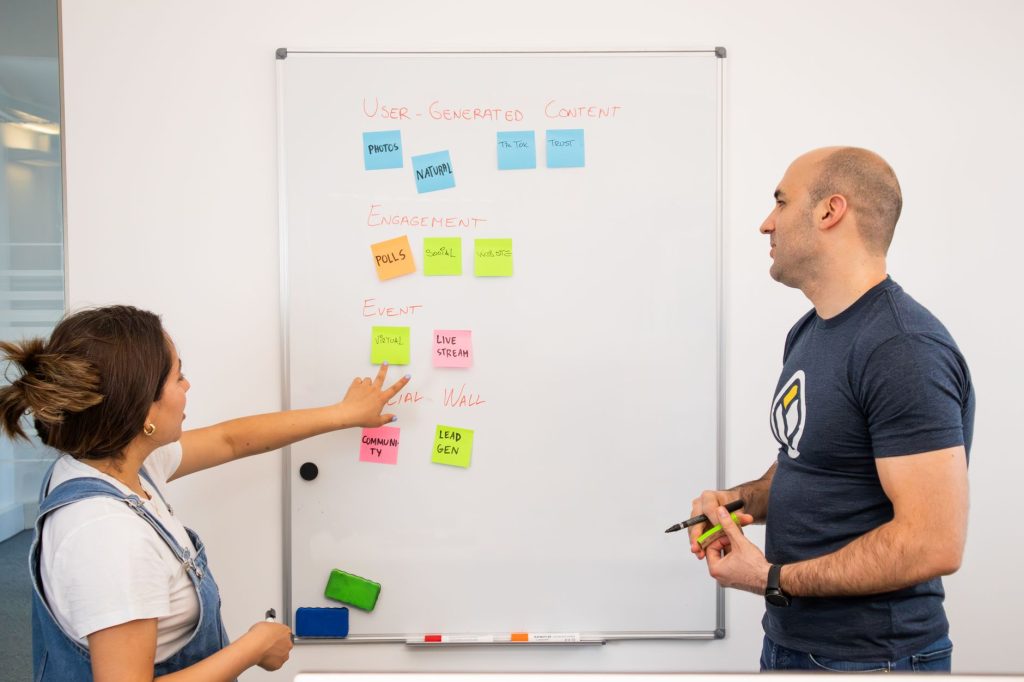
Content teams need an AEO and GEO audit because traditional SEO checklists do not measure whether a paragraph can be quoted cleanly by an AI answer engine. A page can rank well for a keyword and still fail to provide a concise definition, a clear step list, or a trustworthy entity signal that AI search systems can reuse.
The practical problem is editorial ambiguity. Writers often produce long introductions, vague pronouns, and buried conclusions. AI search systems prefer direct answers, standalone sentences, and structured evidence. An AI content auditor gives editors a shared vocabulary for fixing those issues before publication.
What Signals Do AI Visibility Checkers Usually Review?
- Answer clarity: whether the page opens with a direct definition or conclusion.
- Entity salience: whether named people, brands, products, and concepts are explicit.
- Topic confidence: whether the page covers the topic with enough specific detail.
- EEAT evidence: whether experience, expertise, authoritativeness, and trust signals are visible.
- Structure: whether headings, lists, tables, and FAQ blocks make answers easy to extract.
Google’s guidance on AI features in Google Search explains that there is no special optimisation required for AI Overviews beyond helpful, people-first content. That makes editorial quality the real lever.
Who Should Use AI Search Visibility Scores?
AI search visibility scores are most useful for teams that publish informational content at scale and need a repeatable quality gate. The workflow suits SEO professionals, content marketers, marketing agencies, SaaS teams, publishers, and business owners who want to improve how their pages are understood by AI search experiences.
Small teams can use a lightweight version: one audit per draft and one final check before publishing. Larger teams can add scores to editorial briefs, content templates, and revision checklists. Agencies can use AI visibility checks as a client-facing quality report that sits alongside traditional SEO metrics rather than replacing them.
How Do You Add AI Visibility Scores to an Editorial Workflow?
Adding AI visibility scores to an editorial workflow works best as a staged quality gate, not a single score at the end. The sequence below keeps writers focused on clarity first, then structure, then trust evidence, then final simulation.
- Define the target question. Write the exact question the page must answer in one sentence. Editors should reject drafts that do not answer that question within the first paragraph.
- Run a draft-level AEO audit. Paste the draft into an AI visibility checker or use a Chrome extension to audit selected text. Check for a direct answer, standalone sentences, and a clear heading hierarchy.
- Run a GEO and EEAT audit. Review entity salience, named sources, author information, and topic confidence. Add missing entities and replace vague claims with verifiable references.
- Restructure for extraction. Convert buried answers into a definition paragraph, a numbered process, a comparison table, and a visible FAQ block. Each H2 should read like a question or a clear topic label.
- Simulate AI Overviews exposure. Use a preview tool to compare how a brand and a competitor might be evaluated for the same query. Treat the output as a simulation, not a live Google result.
- Record the decision. Log the score, the changes made, and the editor’s final judgement. The log becomes a learning asset for future briefs.
For a fast draft check, the AI SEO Visibility Chrome Extension audits selected content directly from a webpage, which suits editors reviewing live pages or staging environments.
What Does a Realistic Editorial Use Case Look Like?
A realistic use case is a SaaS content team revising a glossary page that explains a technical concept but opens with three paragraphs of background. The page ranks for a long-tail keyword, yet the first clear definition appears far below the fold.
The editor runs an AEO audit and finds a low answer clarity signal. The writer rewrites the opening as a 50-word definition, adds a numbered process, names the relevant standards body, and adds a visible FAQ. A second audit shows stronger topic confidence and entity salience. The team then uses the Google AI Overviews Mirror to preview how the revised page might be evaluated against a competitor for the same question.
The page is not guaranteed to appear in Google AI Overviews. The workflow simply reduces obvious clarity and trust gaps before publication.
What Are the Limitations of AI Visibility Scores?
AI visibility scores are directional signals, not predictions. A high score does not guarantee rankings, traffic, or inclusion in Google AI Overviews, and a low score does not prove a page will fail.
Several factors sit outside any editorial audit. Google’s systems weigh many signals, including links, freshness, and user context. AI answer engines also change frequently. Editors should treat scores as one input among many and keep human review in the loop.
What an AI Visibility Score Cannot Guarantee
- It cannot guarantee Google rankings or inclusion in AI Overviews.
- It cannot replace technical SEO, link quality, or brand authority.
- It cannot verify facts or confirm that a cited source is accurate.
- It cannot reproduce a live AI answer engine result.
- It cannot measure real user satisfaction or conversion impact.
Google’s guidance on creating helpful content reinforces that people-first quality matters more than any single metric. Scores should support that principle, not replace it.
What Should an AEO/GEO Editorial Checklist Include?
An AEO/GEO editorial checklist should combine answer clarity, structure, entity coverage, and trust evidence in one review pass. The checklist below can be attached to every content brief.
| Check | Question to Ask | Pass Criteria |
|---|---|---|
| Direct answer | Does the first paragraph answer the target question? | Yes, in 40–80 words |
| Standalone sentences | Can each key sentence be quoted without context? | No vague pronouns |
| Entity salience | Are brands, people, and concepts named explicitly? | Named in headings or body |
| EEAT evidence | Are sources, author details, and limits visible? | At least two credible references |
| Structure | Are steps, tables, and FAQ blocks present? | Numbered list and visible FAQ |
| Simulation review | Has the page been previewed against a competitor? | Documented in the brief |
Structured data can support clarity but is not a shortcut. Google’s introduction to structured data explains that markup helps search engines understand content, while visible text remains the primary source of meaning.
FAQ
What is an AI visibility score?
An AI visibility score is a diagnostic estimate of how clearly and credibly a page answers a topic for AI search systems. It is not an official Google ranking score and should be used as an editorial quality signal.
How is an AEO audit different from a GEO audit?
An AEO audit focuses on direct answers, question structure, and extractable sentences. A GEO audit focuses on entity clarity, topic confidence, and citation-friendly evidence. Most editorial workflows benefit from both.
Do AI visibility scores guarantee inclusion in Google AI Overviews?
No. AI visibility scores do not guarantee rankings or inclusion in Google AI Overviews. Google states that no special optimisation is required for AI features beyond helpful, people-first content.
Who should run AI visibility checks?
SEO professionals, content marketers, agencies, publishers, and SaaS teams can all use AI visibility checks. Small teams can start with one draft-level audit, while larger teams can add scores to briefs and revision checklists.
What is a common mistake when using AI visibility scores?
A common mistake is treating the score as a ranking metric or publishing target. Scores should guide clarity, structure, and trust improvements, while human editors retain final judgement.
Can traditional SEO tools replace an AEO or GEO audit?
Traditional SEO tools such as Semrush, Ahrefs, Surfer SEO, Clearscope, and MarketMuse focus on keyword, content, and search performance signals. They are useful, but they are not designed specifically as AI search visibility or AEO/GEO auditors.
Use the free Web AEO/GEO Auditor to evaluate pasted content for AI visibility and EEAT signals before your next editorial review.
Reviewed and published by EZ AGENCY AI Team. This article was drafted with AI assistance and edited for accuracy and clarity. Facts should be verified before relying on them for business decisions.
Last updated: November 10, 2026





