
An AI visibility audit becomes actionable when you convert each finding into a specific content task: a clearer answer, stronger entity coverage, a missing proof point, or a structural fix that helps both people and AI systems understand the page. This guide shows how to run an AEO audit and GEO audit, interpret the results honestly, and turn them into a prioritised content plan for AI search visibility.
Further reading: developers.google.com
Key takeaways
- An AI visibility audit is a diagnostic, not a ranking score; it shows whether content is understandable, trustworthy and extractable by AI search systems.
- The output of a good audit is a task list, not a dashboard: each low score should map to one concrete edit.
- Answer Engine Optimization (AEO) focuses on clear, quotable answers; Generative Engine Optimization (GEO) focuses on entity coverage, evidence and context that generative systems can reuse.
- Google AI Overviews do not require special markup; helpful, people-first content and accurate metadata matter more than tricks.
- No audit tool can guarantee rankings or inclusion in Google AI Overviews, and simulated outputs are not live Google results.
What an AI visibility audit actually measures (and what it does not)

An AI visibility audit measures how easy it is for a search engine or AI system to understand, trust and extract your content — it does not measure official Google rankings.
A practical audit looks at signals such as:
- Answer clarity: does the page state a direct answer near the top, in plain language?
- Entity coverage: are the people, products, places and concepts named clearly and consistently?
- EEAT signals: is there evidence of experience, expertise, authoritativeness and trust, such as author details, sources and first-hand examples?
- Structure: do headings, lists and tables make the content easy to parse and quote?
- Topical confidence: does the page cover the question completely enough to be a reliable source?
What it does not measure: your actual position in Google Search, whether Google will show an AI Overview for a query, or how a specific competitor is ranked. AI visibility signals do not guarantee rankings or inclusion in Google AI Overviews. Google’s own documentation on AI features in Google Search explains that there is no special optimisation required for AI Overviews beyond helpful, crawlable content.
Why an AEO audit and GEO audit belong in the same workflow

AEO and GEO overlap but are not identical, and treating them as one checklist prevents wasted effort.
| Dimension | Answer Engine Optimization (AEO) | Generative Engine Optimization (GEO) |
|---|---|---|
| Primary goal | Be the clearest answer to a specific question | Be a trustworthy, reusable source in generated summaries |
| Typical fixes | Direct answer paragraphs, FAQ blocks, concise definitions | Entity consistency, citations, original data, contextual depth |
| Content evidence | Question-to-answer mapping | Author credentials, sources, first-hand experience |
| Common failure | Answer buried under long introductions | Thin or unsupported claims that are hard to verify |
In practice, an AEO audit tells you whether a page can be quoted, while a GEO audit tells you whether it deserves to be. Both feed the same content plan.
Step-by-step: from audit findings to a prioritised content plan

The fastest route from audit to action is to score a small set of priority pages, group the issues, and assign one edit per issue.
- Select the pages that matter. Choose pages that already target commercial or informational queries, plus pages that answer questions your sales team hears often.
- Run a baseline audit. Use a web-based auditor to paste page content and review answer clarity, entity coverage and EEAT signals. A tool such as the AEO/GEO AI Content Visibility Auditor (web version) is designed for this kind of content-level review.
- Record the gaps in a table. For each page, note the question it should answer, the missing entity, the missing proof point and the structural problem.
- Group issues into themes. Typical themes include weak openings, missing FAQs, inconsistent entity naming and unsupported claims.
- Assign one edit per issue. “Add a two-sentence direct answer under the H1” is actionable; “improve EEAT” is not.
- Sequence by effort and impact. Fix answer clarity first, then entity consistency, then add evidence and depth.
- Re-audit after publishing. Compare the same signals to confirm the edit landed, and log what changed.
How to read AI SEO visibility scores without overclaiming
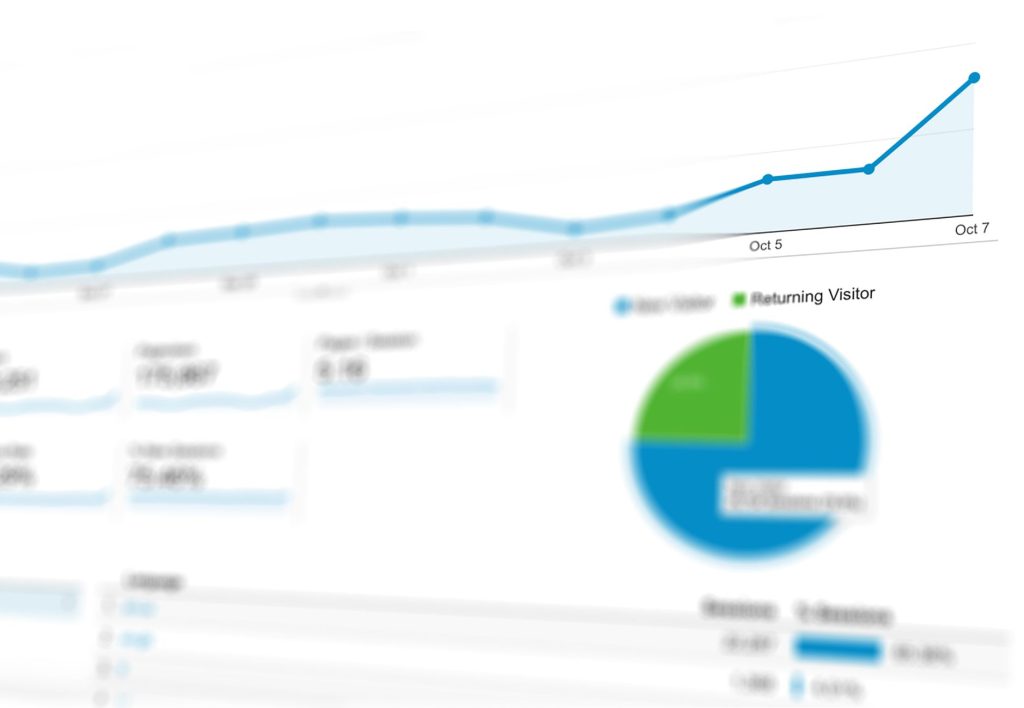
AI SEO visibility scores are directional indicators; they help you compare pages and track improvement, but they are not official Google ranking scores.
Treat a score as a prompt for investigation. A low answer-clarity score usually means the opening paragraph is vague or delayed. A low entity score often means the page uses synonyms inconsistently or never names the organisation, product or author clearly. A low trust score frequently points to missing sources, dates or author context.
Two cautions matter. First, a high score does not guarantee inclusion in AI Overviews or any other AI answer. Second, a simulated AI Overview preview is a model-based estimate, not an actual live Google result. Use simulations to test hypotheses about how a brand and a competitor might be summarised, then verify the underlying content quality directly.
Realistic use case: a B2B SaaS team rebuilding a comparison page
A realistic workflow is to audit one high-intent page, fix the answer layer, then strengthen the evidence layer.
Imagine a SaaS team whose comparison page ranks modestly but rarely appears in AI-generated answers. The audit finds three issues: the page opens with brand history instead of a direct comparison answer, the product category is named three different ways, and the pricing claims have no date or source.
The content plan becomes concrete:
- Add a two-sentence direct answer under the H1 that states what the comparison covers and who it is for.
- Standardise the product category name across the page, headings and metadata.
- Add a visible “last updated” date and link to the source of each pricing claim.
- Add a short FAQ answering the three questions the sales team hears most.
None of these edits guarantees an AI Overview citation. They do make the page easier to understand, quote and trust — which is the controllable part of AI search visibility.
Audit checklist for AI search visibility and Google AI Overviews readiness
A repeatable checklist keeps audits consistent and makes progress measurable across pages.
- Does the page answer its main question in the first 40–80 words?
- Is the primary entity (brand, product, person) named clearly and used consistently?
- Are headings descriptive and hierarchical, with one clear idea per section?
- Is there at least one table, list or comparison that can be extracted cleanly?
- Are claims supported by sources, dates or first-hand examples?
- Is there a visible FAQ covering definition, process, suitability and limitations?
- Is structured data present and accurate where relevant? See Google’s structured data introduction for guidance.
- Does the page avoid keyword stuffing and generic filler?
Google’s guidance on creating helpful, reliable, people-first content remains the baseline for all of the above.
Common mistakes when converting audits into content plans
Most audit-to-plan failures come from treating scores as goals instead of diagnostics.
- Chasing the score: rewriting for the tool rather than for the reader.
- Vague tasks: “improve authority” instead of “add author bio and two cited sources”.
- Ignoring entity consistency: using different names for the same product across pages.
- Overloading one page: trying to answer every related question instead of splitting topics.
- Assuming inclusion: treating a simulated AI Overview as proof of a live result.
Traditional SEO platforms such as Semrush, Ahrefs, Surfer SEO, Clearscope and MarketMuse are useful for keyword, content and technical analysis. They are not the same as AEO/GEO auditing, which focuses on answer extractability, entity salience and trust signals for generative systems. The two categories complement each other.
FAQ
What is an AI visibility audit?
An AI visibility audit reviews content for signals that help AI search systems understand, trust and extract it, such as answer clarity, entity coverage, EEAT evidence and structure. It is a diagnostic, not an official ranking report.
Does an AI visibility score guarantee rankings or Google AI Overviews inclusion?
No. AI visibility signals do not guarantee rankings or inclusion in Google AI Overviews. Google states that no special optimisation is required for AI features beyond helpful, crawlable content.
Who should use an AEO/GEO audit workflow?
SEO professionals, content marketers, agencies, SaaS teams, publishers and business owners who want a repeatable way to improve how their content is understood by AI search experiences.
How is an AEO audit different from a GEO audit?
AEO focuses on whether a page gives a clear, quotable answer to a specific question. GEO focuses on whether the content is a trustworthy, entity-rich source that generative systems can reuse and cite.
What are common mistakes when acting on audit results?
Common mistakes include optimising for the score instead of the reader, writing vague tasks, ignoring entity consistency, overloading single pages and treating simulated AI Overview output as a live Google result.
Can a simulated Google AI Overview preview show real rankings?
No. A simulation estimates how AI search might evaluate and summarise a brand against a competitor. It is not an actual live Google result and should be used for hypothesis testing only.
If you want to review a specific page quickly, the AI SEO Visibility Chrome extension lets you audit selected text directly from a webpage, while the Google AI Overviews Mirror can help you preview how AI search may evaluate your brand against a competitor.
Reviewed and published by EZ AGENCY AI Team. This article was drafted with AI assistance and edited for accuracy and clarity. Facts should be verified before relying on them for business decisions.
Last updated: November 17, 2026





