

An AI search visibility audit becomes actionable when you convert its findings into a prioritised content plan: fix extractability and entity clarity first, strengthen EEAT signals second, and only then expand coverage. This guide walks through the full workflow — from running an AEO audit and GEO audit to turning the output into briefs a writer can actually use.
Further reading: developers.google.com
Key Takeaways

- An AI visibility audit measures how easily AI systems can extract, verify and attribute your content — it is not an official Google ranking score.
- AEO (Answer Engine Optimization) focuses on answer clarity and structure; GEO (Generative Engine Optimization) focuses on how generative systems represent your brand and entities.
- Audit output is only useful when it is converted into prioritised briefs with owners, formats and deadlines.
- Google states that no special markup is required for AI Overviews; strong textual answers and accurate metadata matter most.
- AI visibility signals do not guarantee rankings or inclusion in Google AI Overviews.
- Every content plan should include a re-audit date, because AI answers change as sources and models update.
What an AI Visibility Audit Actually Measures

An AI visibility audit measures whether a machine can understand, trust and quote your content — not whether Google will rank it.
Traditional SEO audits check crawlability, indexation, internal links and on-page keywords. An AEO audit and GEO audit go further. They examine whether your pages contain direct answers, whether entities (people, products, places, concepts) are named explicitly, whether claims are supported by evidence, and whether the page structure lets an AI system lift a clean sentence without losing meaning.
This is why an AI SEO visibility review often flags pages that rank well in classic search but perform poorly in AI answers: the page is optimised for clicks, not for extraction.
The signals most audits examine
| Signal | What it checks | Typical fix |
|---|---|---|
| Answer extractability | Is there a short, self-contained answer near the top? | Add a 40–60 word direct answer under each H2 |
| Entity salience | Are key entities named clearly and consistently? | Name the brand, product and category in plain text |
| Topic confidence | Does the page cover the topic deeply enough to be cited? | Add definitions, comparisons, limitations and examples |
| EEAT audit | Are experience, expertise, authority and trust signals visible? | Add author bios, sources and last-updated dates |
| Structure | Can headings and lists be parsed into discrete answers? | Use descriptive H2/H3s and short paragraphs |
Why Most AI Visibility Audits Never Become Content Plans

Most audits fail at the handover stage: the report is technically correct but written in a language content teams cannot execute.
The problem is a mismatch of units. Audits output scores, flags and percentages. Content teams need briefs, angles, word counts, source requirements and deadlines. Without translation between the two, the audit becomes a PDF nobody opens twice.
Three specific failure patterns appear repeatedly:
- Score without priority. Every page is marked “needs improvement”, so nothing is actually prioritised.
- Diagnosis without instruction. “Low entity clarity” does not tell a writer what sentence to add.
- One-off measurement. The audit is treated as a project, not a recurring checkpoint, so improvements are never verified.
A useful AI content auditor closes this gap by pairing each finding with a suggested action and a re-test method.
Who Should Run This Workflow (and Who Should Not)

This workflow suits teams that already publish content regularly and want it to be eligible for AI-assisted discovery.
It is a good fit for:
- SEO professionals and content marketers managing a blog, resource hub or documentation set.
- Agencies running content retainers who need a repeatable audit-to-brief process.
- SaaS teams whose product pages and comparison pages compete in AI answers.
- Publishers and website owners who want to understand why some pages get cited and others do not.
- Business owners who want a plain-English view of whether their site is understandable to AI systems.
It is a weaker fit for sites with fewer than roughly twenty substantive pages, or for teams with no capacity to edit and republish content. In those cases, fixing a handful of core pages is usually more valuable than building a full audit cadence.
A Step-by-Step Process: From AEO Audit to Content Brief
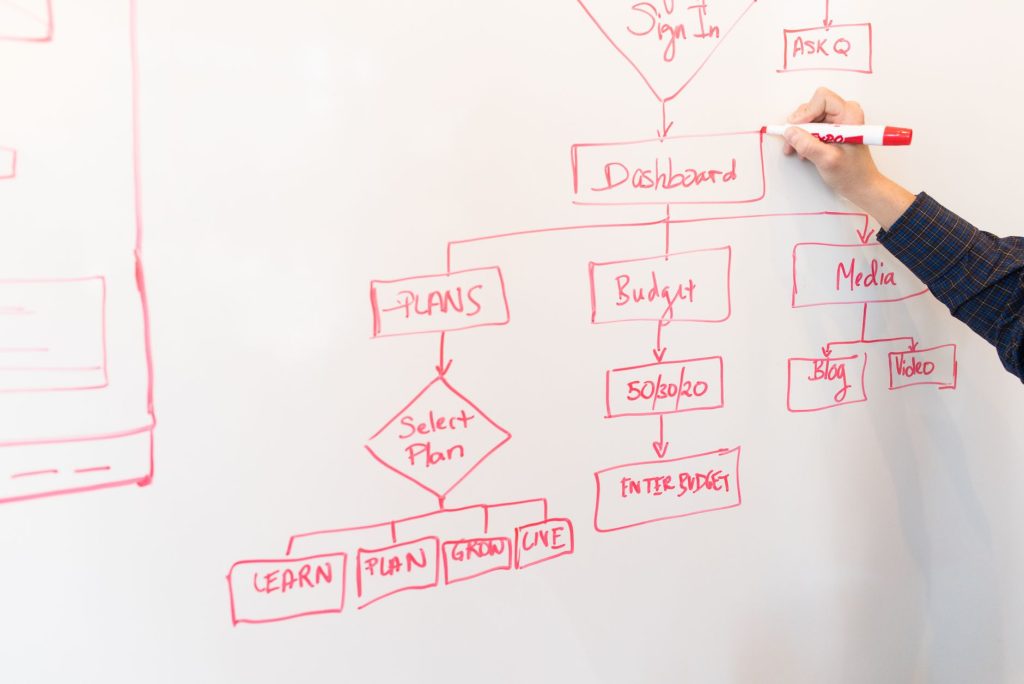
The workflow below converts an audit into a plan in six steps, and each step produces a document the next step can use.
Step 1 — Define the question set you want to be cited for
Start with 10–25 real questions your audience asks, phrased the way they would type or speak them. Group them by intent: definition, comparison, pricing, how-to, troubleshooting. These questions become the spine of the audit and the plan.
Step 2 — Run the audit on the pages that should answer them
Audit the page you believe should win each question, not the whole site. You can paste existing content into the AEO/GEO AI content visibility auditor (web version) to review extractability, entity clarity and EEAT signals in one pass, or audit selected text directly in the browser with the AI SEO Visibility Chrome extension.
Step 3 — Score each page against the five signals
Record a simple rating (strong / partial / weak) for answer extractability, entity salience, topic confidence, EEAT signals and structure. Ratings are easier to prioritise than decimals, and they force a judgement call.
Step 4 — Convert each weak rating into a specific edit
This is the translation step. “Weak answer extractability” becomes “add a 50-word definition directly under the H2”. “Weak EEAT” becomes “add author credentials and two primary sources”. Each edit should be small enough to complete in under an hour.
Step 5 — Group edits into a sequenced plan
Sequence by effort and impact: quick structural fixes first, evidence and author signals second, net-new content last. Net-new content is expensive, so it should only be commissioned once existing pages are genuinely extractable.
Step 6 — Re-audit and record what changed
Set a re-audit date — typically 60–90 days — and compare ratings against the previous run. Keep the comparison in the same document as the plan so improvements are visible without a separate reporting exercise.
Use Case: A B2B SaaS Team Fixing Three Pages
A realistic example shows how small the first iteration usually is.
A mid-sized B2B SaaS team audits five pages: two product pages, one comparison page, one pricing page and one blog post. The audit shows the comparison page has strong structure but weak entity clarity — the competitor and the category are described using pronouns rather than names. The pricing page has strong entity clarity but no direct answer at the top. The blog post is well written but has no author credentials or sources.
The resulting plan has three items, not thirty: rewrite the comparison page’s opening to name both products explicitly, add a 45-word answer block to the pricing page, and add an author bio with two cited sources to the blog post. Each item has an owner and a two-week deadline. The team re-audits after 90 days.
That is what an actionable plan looks like: a small number of specific edits, each tied to a finding and a re-test.
Traditional SEO Tools vs AI Search Visibility Auditing
Traditional SEO platforms and AEO/GEO auditors answer different questions, and both are useful.
| Dimension | Traditional SEO content tools | AI search visibility / AEO-GEO auditing |
|---|---|---|
| Primary question | Will this rank and get clicks? | Can an AI system extract, verify and attribute this? |
| Core inputs | Keywords, backlinks, SERP features, content length | Answer clarity, entities, evidence, structure, author trust |
| Typical output | Rank tracking, keyword gaps, content scores | Extractability ratings, entity clarity flags, EEAT notes |
| Best used for | Demand capture and competitive positioning | Improving how your brand is represented in AI answers |
Tools such as Semrush, Ahrefs, Surfer SEO, Clearscope and MarketMuse are built primarily around the first column. They remain valuable for keyword and competitive research. AI visibility auditing addresses the second column, and the two should be run alongside each other rather than treated as substitutes.
Audit Checklist You Can Reuse
Use this checklist at the end of every audit cycle to confirm the plan is genuinely executable.
- Each audited page is linked to a specific audience question.
- Every page has a direct answer within the first 60 words of its main section.
- Key entities are named in plain text, not replaced by pronouns.
- Claims are supported by at least one credible, linkable source.
- Author or organisation credentials are visible on the page.
- Headings describe the question being answered, not a generic label.
- Each finding has a corresponding edit, owner and deadline.
- A re-audit date is recorded in the same document.
Limitations: What an AI Visibility Score Cannot Guarantee
An AI visibility score is a diagnostic aid, not a prediction of search performance.
Specifically, an audit cannot guarantee rankings, cannot guarantee inclusion in Google AI Overviews, and should never be described as an official Google ranking score. Google’s own guidance notes that AI features are built on core Search systems and that no special optimisation or markup is required to appear in them — see Google’s documentation on AI features and your website.
Other limits worth stating plainly:
- AI answers vary by user, location, query phrasing and time, so results are not reproducible in the way rank tracking is.
- Simulated AI Overview output is a preview of how content may be evaluated — it is not a live Google result.
- Scoring models are heuristics; they approximate extractability and trust signals rather than measuring them directly.
- Improving AI visibility signals does not override the need for genuinely useful, people-first content, which remains the foundation described in Google’s guidance on creating helpful content.
Used honestly, an audit tells you where your content is hard to understand or hard to trust. That is a strong input to a content plan. It is not a promise about outcomes.
FAQ
What is the difference between an AEO audit and a GEO audit?
An AEO audit focuses on whether content answers a question directly and in an extractable format. A GEO audit focuses on how generative systems represent and describe your brand, products and entities. In practice the two overlap heavily, and most audits examine both.
Does optimising for AI search visibility improve Google rankings?
Not automatically. AI visibility work improves clarity, structure and trust signals, which can support overall content quality. However, no audit or optimisation technique guarantees rankings or inclusion in Google AI Overviews.
How often should an AI visibility audit be repeated?
A 60–90 day cycle is a practical default for most content teams. Shorter cycles suit fast-moving topics; longer cycles suit evergreen documentation that changes rarely.
Who is this workflow most suitable for?
It suits SEO professionals, content marketers, agencies, SaaS teams and publishers who already publish substantive content and can act on editing recommendations. Sites with very few pages usually benefit more from fixing those pages directly than from building an audit cadence.
What are the most common mistakes when acting on an audit?
The most common mistakes are treating every finding as equally urgent, commissioning new content before fixing existing pages, and never re-auditing to confirm whether an edit worked. Another frequent error is describing an AI visibility score as an official Google metric.
Can AI visibility tools show how AI Overviews would treat my brand?
Some tools simulate or mirror how AI Overviews-style answers may be assembled for a query, which can help you compare your content against a competitor’s. These simulations are illustrative previews and are not live Google results.
Do I need structured data to appear in AI Overviews?
No. Google states that no special markup is required for AI features. Structured data can still help search engines understand your content, as explained in Google’s structured data introduction, but it is not a requirement for AI Overviews eligibility.
If you want to see how your content scores before committing to a rewrite plan, start by running a few key pages through the free web-based AEO/GEO content visibility auditor. For a competitor-side view of how AI answers may be assembled for your target queries, the Google AI Overviews Mirror is a useful secondary step.
Author disclosure: This article was written by the EZ Agency content team with AI-assisted drafting and reviewed by a human editor. Product references are to EZ Agency tools; EZ Agency is not affiliated with or endorsed by Google.
Reviewed and published by EZ AGENCY AI Team. This article was drafted with AI assistance and edited for accuracy and clarity. Facts should be verified before relying on them for business decisions.
Last updated: October 12, 2026


